
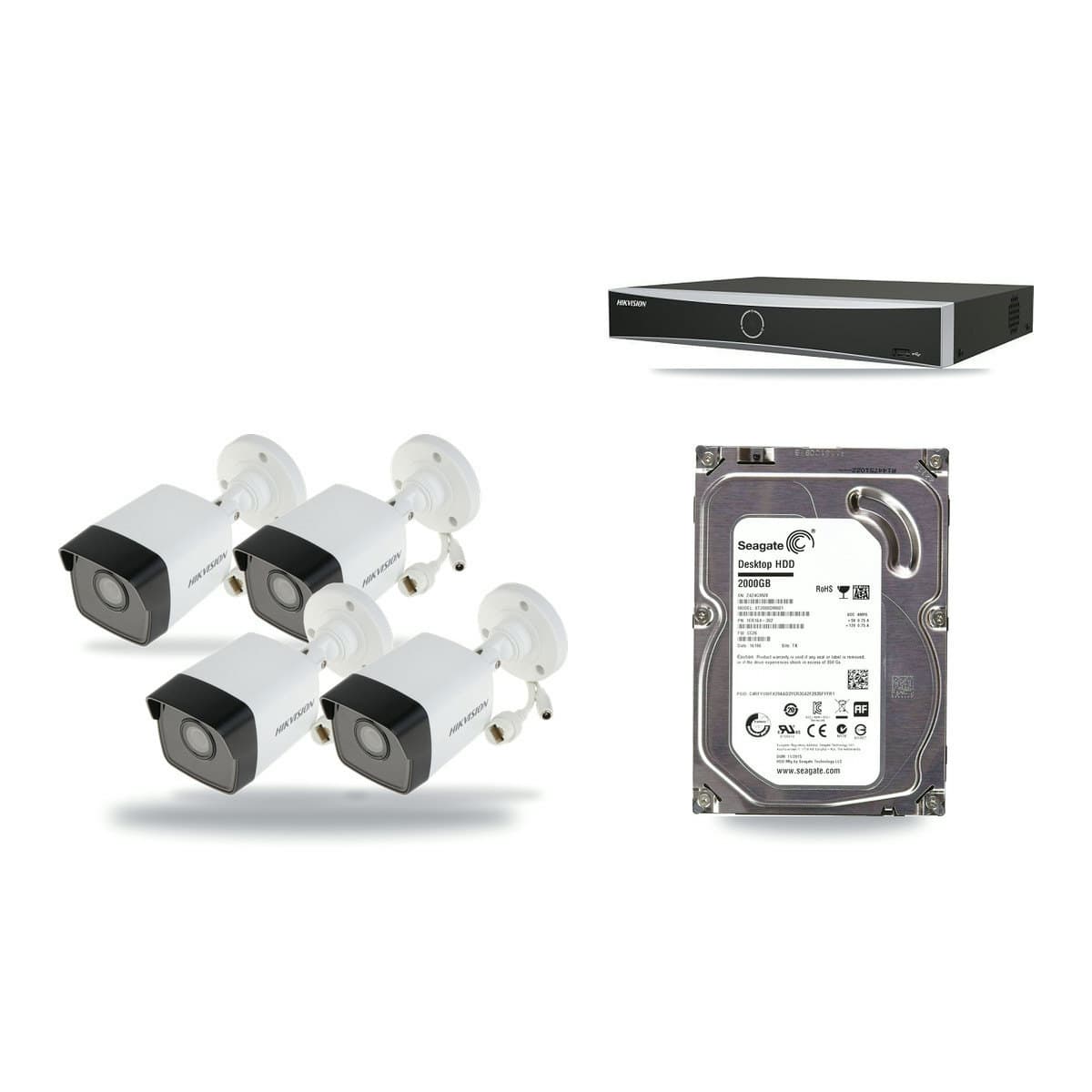
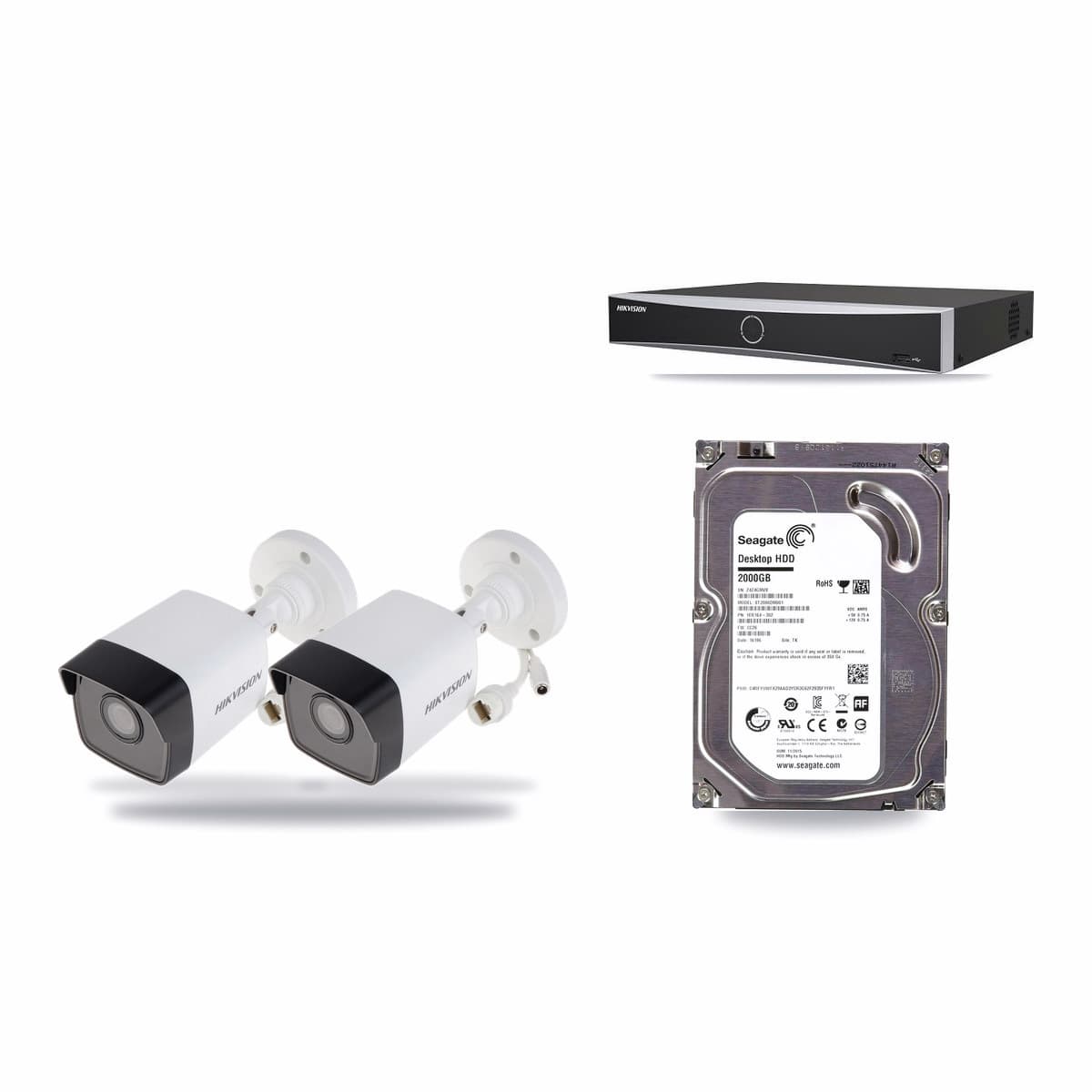
For an outdoor CCTV system on a house, choose a kit whose cameras carry an IP67 rating and use a PoE recorder you keep indoors. Many of our kits state IP67 for their cameras, for example the PoE kits with Hikvision DS-2CD1053G0-IUF bullet cameras: the 4-camera kit with a 2TB drive and the 2-camera kit with a 2TB drive. We supply the kit; you or your electrician fit it.
Outdoor home CCTV: what IP67 means
An IP rating comes from the IP Code, defined in IEC 60529, degrees of protection provided by enclosures. It has two digits: the first is protection against dust and solid objects, the second against water. A higher figure means more protection, so IP67 is a stronger rating than IP65. Every camera in our kits that states a rating states IP67, and no kit of ours states IP66. If a kit page gives no IP figure for its cameras, we do not claim one: ask us before you order if the cameras will sit fully exposed.
The rating covers the camera only. The recorder, the hard drive and the power supply are for indoors, so keep them in a dry spot such as a cupboard under the stairs, a loft room or the garage.
Security cameras for home outdoor use: where they go
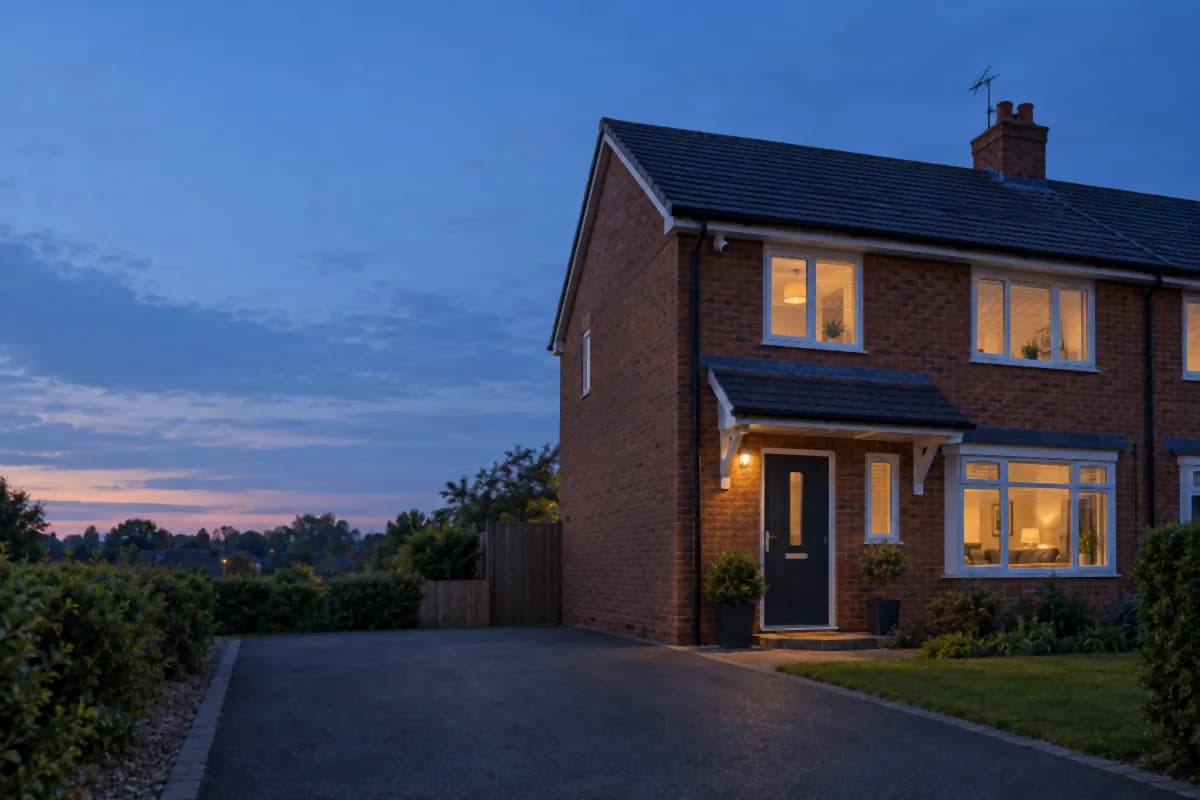
Most houses need three spots outside: the front door, the driveway or front of the house, and the back. Mount each camera under an eave or soffit where it can, because that keeps rain off the lens and the cable entry. Our guide to where to place CCTV cameras walks round a house door by door, so we do not repeat the heights and angles here. To decide how many cameras you need, see which CCTV kit size suits your house.
Cable entry and keeping the connection dry
A PoE camera has one cable: it carries power and video back to the recorder. In the two PoE kits above, each camera comes with a 20m Cat6 network patch cable, and the recorder has four PoE ports. Plan the run from each camera to the recorder before you order, and ask us if a camera sits more than 20m of cable away.
- Drill the hole for the cable at a downward slope towards the outside, so water runs away from the house rather than in.
- Seal around the cable where it goes through the wall.
- Leave a loop of slack below the camera, so water drips off the loop instead of running along the cable into the wall.
- Keep any plug-to-plug join out of the rain: put it inside the house, or in a junction box made for outdoor use.
The IP67 figure belongs to the camera, not to a join you make in the cable, so the join is the part you have to protect yourself. If you are unsure about drilling through an outside wall or about the mains side, use an electrician.
Night vision for outdoor cameras
The DS-2CD1053G0-IUF cameras in those two kits have EXIR 2.0 infrared night vision, a built-in microphone and WDR, which helps when part of the picture is in bright sun and part in shade. If you want colour pictures at night, the 4-camera kit with DS-2CD2347G2-LSU/SL cameras uses 4MP ColorVu turret cameras with a strobe light. Our kit text does not give an IP rating for those cameras, so ask us before ordering if you plan to put them in an exposed spot.
Which kit to look at
Browse the IP (PoE) kits for one-cable cameras. Whatever you choose, check each camera position faces your own property, as the ICO guidance on home CCTV asks.